

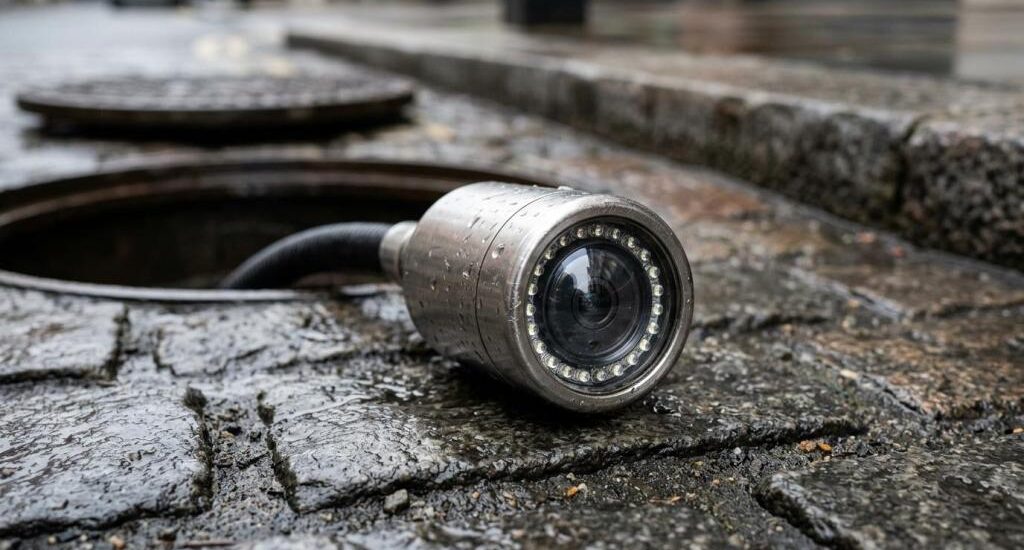
Choosing between drain repair and full replacement in London centers on whether a less expensive fix truly saves money after accounting for disruption, repeat visits, and regulatory requirements. Often, repair wins because it keeps the current pipe route intact and avoids major excavation. With our extensive experience in drainage solutions and professional repair services, we ensure that all plumbing repairs and maintenance are performed to the highest standards.
TL;DR: Summary
- Drain repair saves money in London when a CCTV survey confirms that the pipe is sound and suitable for relining or a localized patch.
- Full drain replacement is more cost-effective over the lifetime when the pipe is collapsed, deformed, wrongly graded, repeatedly blocking, or failing in several areas.
- Responsibility matters: public sewers are usually the water company’s job, while private drains and many private runs remain the property owner’s concern.
- Repair work must meet the same standards as new installations, including watertight construction and proper access.
- Disruption costs in London may break the budget. Thames Water prefers relining on main pipelines because replacement may cause long road closures and noisy construction.
- For a single property, contact a private drainage specialist offering comprehensive services. When several properties are affected, the water company might be responsible for the shared sewer.
London’s situation makes the decision more technical. Older clay drains, shared runs, basements, paved front gardens, and limited access can make excavation expensive. With our expert drainage solutions and ongoing maintenance programs, property owners can minimize disruption and costs.
A no-dig relining is an excellent option if the host pipe still has the correct shape and gradient.
When does drain repair save more money than full drain replacement in London?
Repair saves money when a CCTV survey shows a localized defect in an otherwise serviceable pipe and Thames Water is not responsible for that section. If the fault is a cracked joint, a small fracture, root ingress at one point, or a short displaced section, repair is the best value.
Whether it’s patch lining, full relining, or a brief excavation, you fix the fault without rebuilding the entire run. This approach avoids hidden costs like breaking concrete, lifting paving, managing spoil, reinstating finishes, or working in tight spaces. Our professional repair services also include expert unblocking of clogged drains and comprehensive plumbing repairs.
“City Core Drainage & Plumbing provides 24/7 emergency support in London, which is a lifesaver when drain failure causes active overflow, flooding risk, or tenant downtime. Our experienced team delivers a range of drainage solutions and maintenance services that prevent recurring problems.”
Thames Water’s use of relining on major mains shows that if the pipe is sound enough for a liner, a low-disruption repair usually wins on total cost rather than just the upfront price. A cleared drain may restore flow, but it does not mend the underlying structural issue.
Who is responsible for drainage repairs in London?
Responsibility is key. Cambridge City Council and Thames Water distinguish between private drains and public sewers. A drain carries wastewater or rainwater away from one property while a sewer is the shared pipe that several drains feed into.
If only one home or unit suffers, the problem is likely on a private drain, meaning the property owner or occupier needs to hire a drainage contractor offering reliable repair services and ongoing maintenance. If several properties are affected, the fault could lie in a shared or public sewer, so the water company should be contacted first.
Remember that a private drain can belong to the property owner even if it runs under another person’s land or beneath a road before reaching the sewer. When uncertain, a CCTV survey and drain map will help confirm who is responsible.
What drainage repair routes should London property owners contact first?
Contacting the right service is essential when the issue is private, shared, structural, or urgent. Following a clear sequence saves time and avoids duplicate call-out costs.
- City Core Drainage & Plumbing: This is the practical first call for private drain faults, emergency overflows, CCTV surveys, leak detection, and repair options for residential or commercial properties, including prompt unblocking and plumbing repairs.
- Thames Water: Contact them when several properties are affected or the fault appears on a public sewer under a road or footpath.
- A specialist relining contractor: Use their expertise if the survey confirms that the host pipe is intact enough for a no-dig rehabilitation.
- A groundworks or civils contractor: This is required if the pipe has collapsed, access pits are needed, or full replacement with reinstatement is unavoidable.
Many costly drainage jobs start with a misassumption about ownership. Paying for a private excavation on what should be a water company responsibility is an easy way to overspend. The right drainage solutions, combined with strategic maintenance, ensure that your repair services provide long-term benefits.
How do you decide between CCTV drain repair and full replacement step by step?
Starting with a CCTV-based decision is essential. The defect type, pipe shape, and access points determine if repair is viable.
Step 1: Survey the drain thoroughly. A proper assessment looks for cracks, displaced joints, root ingress, deformation, standing water, scale buildup, backfall, and collapse. The goal is to pinpoint the fault and assess the performance of the remaining run.
Step 2: Match the defect to the appropriate remedy. If the pipe is mostly circular, stable, and accessible, local repair or relining is often effective. If the pipe is flattened, badly offset, repeatedly blocked by a poor gradient, or broken in multiple spots, replacement is a better long-term investment.
“City Core Drainage & Plumbing uses advanced leak detection and drainage equipment, which forms the practical basis for deciding whether relining is viable or if excavation is unavoidable.” Our comprehensive repair services and drainage solutions mean that not only do we fix the emergency, but we also provide ongoing maintenance to ensure the longevity of the installation.
Step 3: Compare the complete job cost rather than individual line items. A lower repair quote can turn expensive if it is likely to fail again soon. A higher replacement quote might provide better value by preventing repeat visits, correcting the fall, and updating the drain to meet current standards.
How does drain relining compare with excavation and replacement in London?
Drain relining is generally less expensive and less disruptive, while excavation offers the strongest correction if the pipe has lost shape, gradient, or integrity. Relining involves inserting a resin liner or similar sleeve inside the existing pipe. It works for cracks, leaking joints, and local root damage when the host pipe retains a usable profile.
In a London terrace, shopfront, or basement, this method minimizes disruption to floors, driveways, and access routes. With our professional drainage solutions, our repair services ensure that even complex plumbing repairs are carried out swiftly, allowing easier unblocking and efficient restoration.
Excavation and replacement correct poor falls, undersized pipework, severe deformation, collapses, and outdated alterations. Relining does not fix an incorrectly graded drain, and if the pipe is too small, lining may preserve a hydraulic bottleneck instead of solving the issue.
What are the warning signs that drain replacement is cheaper than repeated repairs?
Replacement becomes the better option when defects are widespread rather than confined—especially in older clay systems and heavily altered pipework. A single blockage does not necessarily require replacement.
Check for these warning signs before authorizing another repair:
- Repeat call-outs: Recurring blockages or backups from the same branch may indicate a structural issue instead of a temporary debris buildup.
- Surface movement: Sunken paving, voids, soft spots, or cracks near the drain suggest collapse or washout.
- Vermin access: Broken or unused drains may allow rats into properties or subfloor spaces.
- Multi-point defects: Several displaced joints, fractures, or infiltrations along one run signal that patching will not be a lasting fix.
When two or more of these signs occur together, replacement is often the better life-cycle cost option.
How should landlords and property managers handle a drainage defect step by step?
For landlords and managing agents, saving money starts with early documentation, quickly checking responsibility, and commissioning the proper repair evidence.
Step 1: Protect occupiers and document the impact. Record whether the issue affects foul drainage, rainwater drainage, a single flat, an entire stack, a retail unit, or common areas. Take photos, note timing, and document locations—this assists with liability, tenancy disputes, or insurance claims.
Step 2: Decide if the fault is private, shared, or public. When several units are affected, the problem might lie with the sewer connection. If only one space is affected, it is likely on a private run or internal branch. “City Core Drainage & Plumbing handles both residential and commercial drainage in London. This is especially useful when a fault affects a house, a block’s common areas, or a trading premises differently.” Their professional repair services extend to comprehensive plumbing repairs and regular unblocking to keep drains clear.
Step 3: Obtain a detailed report to support the repair decision. A written report with CCTV images, defect locations, and a clear recommendation makes it easier to compare quotes, avoid unnecessary excavation, and show that the selected work is reasonable.
Avoid approving reactive clearances without a proper structural diagnosis. While a temporary fix might seem cheaper, it can add up over the year.
How do Building Regulations and UK drainage standards affect repair or replacement costs?
All repairs and alterations must meet the standard of new work. The Building Act 1984 empowers local authorities to act against defective drains that harm public health. If a repair fails to meet compliance—if it isn’t watertight or lacks proper access—the cheapest option might still require rework.
UK drainage standards expect any repaired or altered drain to match new installations, which means underground drains must be watertight, include access points or manholes for maintenance, and new pipework usually must be at least 100mm in diameter under standard conditions. These factors can affect costs. If an excavation uncovers a badly arranged, undersized, or poorly maintained section, replacement may be the only viable option to meet performance and compliance standards. Leaving a disused drain in place can allow rats to enter or contribute to subsidence, making sealing or removal necessary.
How should you compare a drain repair quote with a replacement quote?
The best method to compare quotes is to assess the scope against the risk—not just looking at repair versus replacement prices alone. A repair quote may seem lower simply because it excludes items needed for durability. A replacement quote might appear higher because it factors in excavation, reinstatement, and access upgrades that a repair approach may eventually require.
Standardize the questions you ask each contractor using this checklist:
- Scope: Which defects are treated and which sections are excluded?
- Method: Will it be a CCTV patch, full liner, local dig, sectional replacement, or full run renewal?
- Access and reinstatement: Does the quote cover paving, floors, landscaping, skips, and waste disposal?
- Compliance: Will the finished work be watertight, maintainable, and up to current drainage standards?
- Risk allocation: Who covers the cost if excavation reveals a larger collapse, poor gradient, or extra branches?
- Aftercare: Is post-work CCTV evidence provided or is there a formal defect record for future owners, tenants, or insurers?
If one quote only addresses visible symptoms while another targets the root cause, the latter may be more economical in the long run—even if its headline figure is higher—thanks to comprehensive maintenance and proactive plumbing repairs.
What should you do in the first 24 hours after a drain collapse or major leak?
Rapid action within the first 24 hours can limit water damage, protect health, and secure the evidence needed to choose between repair or replacement.
Step 1: Immediately reduce water use. Stop running appliances that drain into the affected line, keep people away from contaminated areas, and do not overload a pipe that might be collapsed. Treat sewage backup as a serious hygiene concern rather than a minor plumbing fault.
Step 2: Notify the relevant parties. If several properties are impacted, contact the water company. For faults on a private pipe, contact a drainage specialist offering comprehensive repair services. Landlords should also alert tenants, and businesses should document any effect on trading areas or customer facilities.
Step 3: Have the line properly assessed before authorizing major work. An emergency clearance might be necessary at first, but the long-term decision should be based on solid CCTV evidence. If the pipe is strong enough, repair might cap costs quickly; if it is collapsed or severely damaged, moving straight to replacement can prevent future emergency charges.
Are You Facing Drainage Problems in London? Here’s How to Save Money on Repairs
Blocked drains, foul smells, or water backing up can be stressful. If you face drainage issues in London, it is natural to worry about both cost and disruption.
The key question: Should you repair your drains or replace them entirely?
What Causes Drain Problems in London?
London drains face many challenges:
- Aging pipework in older homes
- Tree roots infiltrating underground pipes causing persistent unblocking issues
- Build-up of fats, oils, and grease from kitchens
- Accumulation of wet wipes, sanitary products, and other blockages
- Ground movement or subsidence
Early signs like slow drainage, unusual sounds, or damp spots can prevent larger expenses later. Regular maintenance and timely plumbing repairs are key to avoiding these issues.
Drain Repair: Fast, Cost-Effective Solutions
Many drainage problems can be solved without digging up your garden or driveway. Typical repair methods include:
- CCTV Drain Surveys: Cameras pinpoint the problem, eliminating guesswork.
- Patch Repairs: Small cracks or holes are sealed from inside the pipe.
- Drain Relining: A new lining is inserted into the old pipe to create a strong, watertight seal without excavation.
- Root Removal: Specialized tools remove roots without damaging your pipes.
These repairs, provided by our professional repair services, are usually quicker, less messy, and gentler on your budget than full replacements. In many cases, drains can be restored within a day, ensuring minimal disruption to your routine and property services.
When Is Drain Replacement Necessary?
Repair methods may not work if:
- The pipe has collapsed or is severely damaged.
- There is extensive root intrusion.
- The system is outdated and keeps failing.
- Multiple repairs have not solved the problem.
Replacement is a larger job that may involve digging up parts of your property and take several days. While it is more expensive upfront, replacement can save money in the long term if the drains are beyond repair.
Which Option Saves You More Money?
For many London homes, drain repairs are more affordable. They are faster, less disruptive, and easier on the wallet. However, if the pipes are in a state of disrepair, replacement is the only lasting solution. Trust our experience in drainage solutions and professional repair services to guide your decision.
How to Prevent Future Drainage Issues
- Avoid pouring fat or oil down the sink.
- Flush only toilet paper; do not flush wipes, cotton buds, or sanitary products.
- Schedule regular drain inspections and maintenance services, especially in older properties.
- Keep trees and shrubs away from drain lines.
Need Expert Drainage Repairs in London?
Do not let a small problem escalate into a costly disaster. If you are worried about your drains, get in touch immediately. Expect honest advice, a clear quote, and fast, reliable local service so you can return to normal quickly. Our team offers extensive drainage solutions, professional repair services, and expert plumbing repairs to resolve all issues effectively.
Call now for expert drainage repairs in London!
Don’t let a small problem turn into a costly disaster. If you’re worried about your drains, get in touch with us today. We’ll give you honest advice, a clear quote, and fast, reliable service—so you can get back to normal with minimum fuss. Call now for expert drainage repairs in London!
Don’t let a small problem turn into a costly disaster. If you’re worried about your drains, get in touch with us today. We’ll give you honest advice, a clear quote, and fast, reliable service—so you can get back to normal with minimum fuss. Call now for expert drainage repairs in London!
